
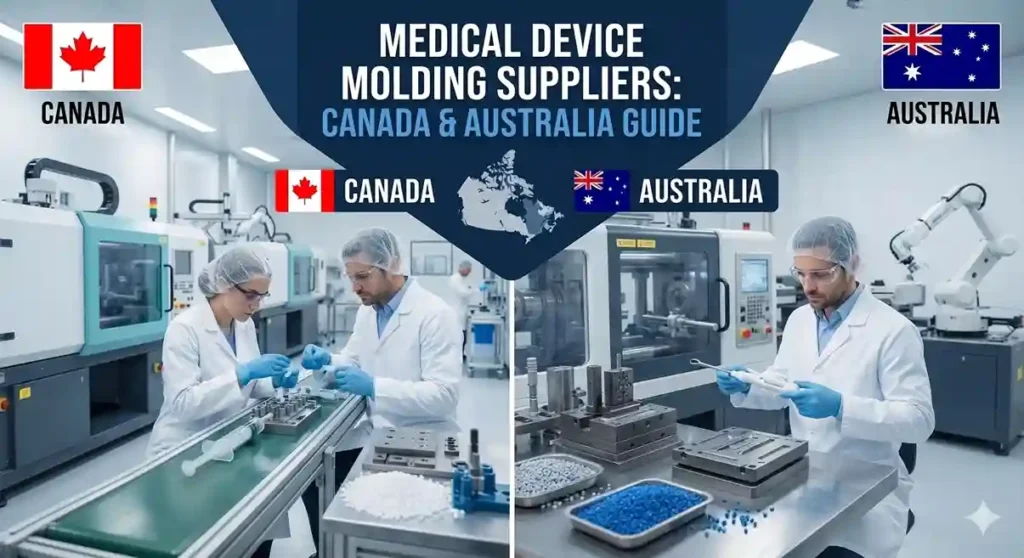
Selecting a medical injection molding supplier can affect the manufacturing and quality evidence an OEM uses to support finished-device compliance. However, a contract molder does not automatically become the legal manufacturer, Canadian licence holder, importer or distributor, Australian sponsor, or ARTG applicant. The regulated entity remains responsible for determining the device classification, market-authorisation route, and applicable quality-system requirements.
OEMs should evaluate a molder according to the outsourced process and the risk of the finished device. Relevant controls may include documented specifications, design-for-manufacturing review, material and lot traceability, inspection, process validation where required, nonconformance handling, change notification, record retention, and audit support. These responsibilities should be defined in the supplier quality agreement.
Why Supplier Choice Still Matters, Even Without Direct Licensing Obligations
Choosing a medical injection molding supplier is not the same as choosing any other contract manufacturer. Even though the molder itself usually doesn’t hold an MDL, MDEL, or ARTG entry, the work it performs still becomes part of the evidence an OEM relies on. Mold qualification records, resin lot traceability, inspection data, and process logs from that supplier can all be requested during a Health Canada or TGA review of the OEM’s own quality system.
That’s the real reason supplier selection deserves scrutiny: not because the molder is personally on the hook for a licence, but because the OEM’s compliance case is only as strong as the documentation its suppliers can produce on request.
Canada Regulatory Framework: What Actually Applies to a Molding Supplier
Canada regulates medical devices under the Medical Devices Regulations (SOR/98-282), made under the Food and Drugs Act. Licensing, establishment requirements, and inspections all trace back to this regulation.
In Canada, Class II, III, and IV medical devices require a Medical Device Licence (MDL) held by the legal manufacturer. A Medical Device Establishment Licence (MDEL) generally applies to Class I manufacturers and to companies that import or distribute medical devices. A company performing only contracted manufacturing does not automatically require an MDEL solely because it molds a component, although additional activities — such as also acting as an importer or distributor of a finished device — may change that analysis.
For Class II–IV devices, the legal manufacturer must provide an accepted ISO 13485 quality-management-system certificate through Health Canada’s applicable MDSAP framework. A subcontractor’s separate certificate does not replace the legal manufacturer’s QMS certificate. The OEM must nevertheless control outsourced molding activities through supplier qualification, specifications, purchasing controls, validation, and change control.
The 2026 MDEL Guidance and Component Suppliers
"Health Canada has issued an updated version of GUI-0016, dated June 17, 2026, which will take effect on December 14, 2026. Until that date, the document is for reference only and the current guidance remains in force
The updated guidance states that importation and distribution are the activities licensed under an MDEL; contracted manufacturing alone is not an MDEL-licensable activity. It defines a supplier as a person other than the manufacturer who distributes or sells a medical device to an MDEL holder for import or sale in Canada. Therefore, this definition should not automatically be applied to a resin supplier, toolmaker, or molded-component supplier unless the supplied item is itself a regulated medical device
Australia Regulatory Framework: What Actually Applies to a Molding Supplier
In Australia, most medical devices must be included in the Australian Register of Therapeutic Goods (ARTG) before legal supply, unless an exemption or exclusion applies. An overseas manufacturer normally works with an Australian sponsor, who submits and maintains the ARTG entry. A contract component molder does not automatically become the sponsor or ARTG holder.
The TGA may consider MDSAP certificates and audit reports as part of the regulatory evidence submitted by sponsors and manufacturers. However, MDSAP certification does not itself grant ARTG inclusion, and the TGA retains the right to request further evidence or conduct an audit.
Conformity Assessment and Application Audits
Evidence may include a TGA conformity assessment certificate or eligible evidence from a recognised comparable overseas regulator or assessment body. MDSAP audit reports and certificates may form part of the evidence assessed by the TGA, but they do not constitute ARTG approval.
An application audit is a TGA review conducted as part of an application for ARTG inclusion. It is a review of the sponsor’s or manufacturer’s application and supporting evidence — it is not automatically an audit of an injection molding supplier several tiers down the supply chain. Certification under EU MDR or IVDR can support an application and may reduce the evidence the TGA needs to request, but it does not always prevent the TGA from asking for further information or conducting its own review; the outcome depends on the specific device and application.
UDI Requirements
From July 1, 2026, UDI requirements began applying to certain Class IIb and Class III devices, subject to the phased implementation schedule, transitional arrangements and applicable exemptions."
Canada vs. Australia — Regulatory Comparison at a Glance
| Canada | Australia | |
|---|---|---|
| Regulator | Health Canada | Therapeutic Goods Administration (TGA) |
| Governing law | Medical Devices Regulations (SOR/98-282) | Therapeutic Goods (Medical Devices) Regulations 2002 |
| Market authorisation | MDL for Class II–IV devices, held by the legal manufacturer | ARTG inclusion for most medical devices; the Australian sponsor submits the application |
| Establishment/local market role | MDEL generally applies to importers, distributors and certain Class I manufacturers, subject to exemptions | An overseas manufacturer requires an Australian sponsor |
| QMS/regulatory evidence | Class II–IV legal manufacturers require an accepted ISO 13485 certificate under MDSAP | Requirements and accepted evidence depend on the device class and conformity-assessment pathway; ISO 13485 and MDSAP evidence may be relevant but are not universal requirements for every device |
| Contract molder | No automatic MDL or MDEL solely for contracted molding | No automatic ARTG or sponsor obligation solely for contracted component molding |
What an OEM Should Actually Verify in a Molding Supplier
Rather than asking whether a molder holds a specific licence it likely doesn’t need, the more useful questions focus on the process controls that will actually support your own regulatory file:
- Material and lot traceability: Can the supplier trace resin lots forward to finished parts and backward to raw-material certificates of analysis?
- DFM and tooling records: Is there a documented design-for-manufacturing review, and are mold qualification and maintenance records kept and retrievable?
- Dimensional inspection and measurement capability: What inspection equipment and sampling plans are used, and are results recorded against your specifications?
- Process validation support (IQ/OQ/PQ or equivalent): Can the supplier support installation, operational, and performance qualification when your validation plan calls for it? Validation depth should be driven by the process, the finished-device risk, and your own validation plan — not treated as a universal requirement for every molded component.
- Nonconformance and CAPA handling: How are deviations documented, escalated, and closed out?
- Change-notification procedures: Will you be notified before a material, tooling, or process change, with time to assess impact and re-validate if needed?
- Mold maintenance and process records: Are preventive maintenance schedules and process parameters logged and available for review?
- Packaging and contamination controls: Are packaging methods and any environmental controls appropriate to how the component will be used downstream?
- Supplier quality agreements: Is there a written agreement defining responsibilities, specifications, and audit rights?
- Record retention and customer-audit support: How long are records kept, and how quickly can the supplier respond to an audit request or produce documentation for your regulatory file?
ISO 13485 certification can be an important customer qualification criterion and may simplify supplier approval, particularly for higher-risk or validated programs. However, certification should be evaluated together with its scope, covered sites and processes, and objective evidence of process control. The legal manufacturer remains responsible for qualifying and controlling outsourced suppliers according to risk.
Conclusion
Choosing a medical injection molding supplier for Canada and Australia isn’t about finding the lowest quote or the fastest turnaround. It’s about finding a partner whose process controls and documentation can hold up under your own regulatory scrutiny. The legal obligations for device licensing, ARTG inclusion, and QMS certification sit with the OEM, importer, distributor, or sponsor of record. What the OEM controls, and should evaluate carefully, is how well a molding supplier’s specifications, traceability, validation support, and change management integrate into that broader compliance picture.
MedMoldPro is operated by C.K. MOLD & ENGINEERING LIMITED in China and works under an ISO 9001:2015-certified quality management system. Backed by CKMOLD’s injection mold manufacturing and molding experience, MedMoldPro supports non-implant medical, diagnostic, and laboratory plastic component projects with DFM, tooling, molding, inspection, and project-specific documentation when agreed in the quotation or quality agreement.
Get in touch to discuss your project →
Frequently Asked Questions
Does a molding supplier need an MDEL or ARTG entry?
Not automatically. The answer depends on the supplier’s legal role and whether the supplied product is itself a medical device. A company performing only contracted component manufacturing normally does not become the Canadian licence holder or Australian sponsor solely because it molds the component.
Is MDSAP mandatory in Canada and Australia?
Canada uses MDSAP as part of the QMS certification pathway for legal manufacturers of Class II–IV devices. Australia does not universally require MDSAP, but the TGA may accept MDSAP reports and certificates as part of the regulatory evidence. It is not automatically required for every independent component molder.
What cleanroom class is required for medical injection molding?
No universal ISO Class 7 or Class 8 cleanroom requirement applies to every medical molded component in Canada or Australia. The required manufacturing environment depends on the component’s intended use, contamination risks, sterilisation status, the finished device, and the OEM’s specifications. Suppliers should only claim cleanroom production when the facility and its classification can be documented.
How do Health Canada’s 2026 MDEL changes affect OEM supplier lists?
Phase 2 amendments, taking effect December 14, 2026, require MDEL applicants and holders to list certain suppliers connected to the devices they import or sell. In this context, "supplier" refers to a party distributing or selling a medical device to the MDEL holder — it does not automatically extend to a resin, tooling, or molded-component supplier unless what they supply is itself a regulated medical device. See Health Canada’s GUI-0016 guidance for the applicable definitions.
Can one MDSAP certificate support both markets?
MDSAP evidence may be relevant to both markets when the manufacturer, sites, processes, and regulatory scope are properly covered. However, one certificate does not automatically satisfy every Canadian and Australian requirement — the scope still needs to be checked against the specific device classes and processes involved.
Disclaimer: This article provides general information and is not legal or regulatory advice. Requirements should be confirmed for the specific device, business role, and current regulations.
Last updated: September 2026