
Year: 2026

Vet a Chinese Medical Injection Molding Supplier
Medical Device Injection Molding

How to Vet a Chinese Medical Injection Molding Supplier?

Some buyers may begin assessing Chinese medical injection molding suppliers based on pricing. But honestly, vetting a medical injection mold supplier extends far beyond that1. To evaluate the legitimacy of your supplier, verify whether the company adheres to a strict regulatory framework, holds relevant certifications, and meets biocompatibility, safety, and consistency standards2. This guide outlines a detailed process for vetting a Chinese Medical Injection Molding Supplier. So, whether you are a procurement officer, a medical company owner, or a project engineer, this guide has everything you need to get started. How Does Medical Injection Molding Manufacturing Differ from Standard Injection

Read More »
Sourcing Medical Device Injection Molding From China to Germany
Medical Device Injection Molding

Sourcing Medical Device Injection Molding From China to Germany

Sourcing Medical Device Injection Molding From China to Germany No doubt, the Chinese injection molding market is highly competitive. But not all molders fulfil the strict regulatory standards necessary for medical injection molding. Do you want to source medical device injection molding from China for Germany? Then, you need some strong technical knowledge. And stay updated with industry insights. So, here we have a fully prepared roadmap for sourcing from China to Germany. We’ll also discuss market stats, regulatory requirements, and solutions to sourcing challenges. Whether you are sourcing injection molding pipette tips or tube caps, this will ensure a

Read More »
sourcing medical injection molding
Medical Device Injection Molding

How US Medical Device Companies Source Injection Molding from China?

Sourcing medical device injection molding from China to the US is a strategic move and can bring tremendous advantages to your business. Yet, it is not an easy process. With the global medical injection molding market expanding at a CAGR of 7.74% (2026-2032), the medical regulatory requirements are getting more stringent at every step. In practice, 75% of the issues arise not because of a lack of manufacturing capabilities, but because of a lack of understanding of process validation, hidden costs, and how sourcing works. So, it’s time for careful understanding and strategic planning. Here are some detailed insights into

Read More »
injection molding

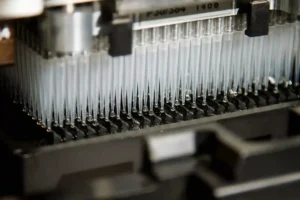
How To Ensure Precision In Manufacturing Injection-Molded Pipette Tips For Lab Diagnostics?

Pipette tips are manufactured through the injection molding process1. However, maintaining precision throughout the process is non-negotiable. Otherwise, it may lead to injection-molding defects such as warping, burrs, and voids. This may compromise sample integrity, affect liquid-handling accuracy2, and more. Here is a detailed guide to the injection molding process to manufacture accurate Injection-Molded Pipette Tips For Lab Diagnostics. Additionally, we provide key technical insights into how to adjust process parameters, select materials, and meet tooling requirements. Why Does Precision Matter in Manufacturing Injection-Molded Pipette Tips? In laboratory diagnostics, accuracy is the baseline for both manual testing and automated systems.

Read More »
Custom Molded Sample Collection Tube Caps
injection molding

Custom Molded Sample Collection Tube Caps– A Design and Manufacturing Guide

Where generic off-the-shelf caps suffer, custom-molded sample collection tube caps excel. These injection-molded custom caps pair well with different medical tubes or diagnostic assay kits. To begin with, engineers rely on an effective design strategy and material selection. This lays a strong foundation. If done right, it results in products with exact dimensions, high seal integrity, and strict regulatory compliance. So, in this article, we’ll walk you through the core strategic considerations specifically targeted for custom applications and requirements. What are Custom Molded Sample Collection Tube Caps? Custom molded sample collection tube caps are sealing closures you use for securing

Read More »
Medical Device Injection Molding

Injection Molding for COVID Rapid Antigen Test Devices: How Does It Enable Mass Production?

During the pandemic, testing demand exploded overnight. Many teams struggled to produce millions of accurate test cassettes fast enough. Poor part consistency ruined membrane alignment and fluid flow. This is where injection molding became the backbone of rapid antigen test manufacturing, delivering precise, repeatable plastic parts at massive scale when the world needed them most. Featured Answer Injection molding is widely used for COVID rapid antigen test devices because it supports high-volume, low-cost production of precise plastic parts like cassettes, housings, swab components, and buffer bottles. The process delivers consistent dimensions, tight tolerances, and repeatable geometry needed for membrane alignment

Read More »
Medical Device Injection Molding

Low Volume Molding for Blood Glucose Test Strip Housings: Is It the Smart Path Before Mass Production?

You need blood glucose test strip housings for a clinical trial or early launch, but committing to expensive production tooling feels risky when your design may still change. One late revision can waste months and thousands of dollars. This is a real fear I hear from diagnostic engineers every week. Low volume molding solves this by giving you precise, biocompatible parts without locking in your design too early. Low volume molding for blood glucose test strip housings works best with medical-grade injection molding using a simple, high-precision tool and a resin chosen for dimensional stability and biocompatibility. The key is

Read More »
Medical Device Injection Molding

Injection Molded Microfluidic Chips for Point-of-Care Diagnostics: Ready for Mass Production?

Many diagnostic teams design brilliant microfluidic chips in the lab, then hit a wall when they try to scale. The chip works on a bench but fails in production. Yields drop. Costs explode. The launch stalls. I have seen this many times. The good news is that injection molding solves most of these problems—if you design for it from day one. Injection molded microfluidic chips are polymer cartridges made by high-volume molding to run diagnostic tests outside a central lab. They pair low-cost disposable chips with portable reader devices for point-of-care use. Common materials include COC, COP, PMMA, and PC

Read More »
Medical Device Injection Molding

Custom Molded Housings for Rapid Diagnostic Test Kits: How Do You Get Them Right?

You designed a great rapid diagnostic test, but the housing keeps failing. Parts don’t snap together. The result window fogs up. Reagents attack the plastic. These problems delay your launch and hurt user trust. I have seen this many times. The good news is that a well-designed custom molded housing solves all of these issues at once. Featured Answer Custom molded housings for rapid diagnostic test kits are usually injection-molded plastic cassettes, sample enclosures, or reader guides built for tight fit, repeatability, and clean assembly. Good housings protect the test strip, align sample and reagent flow, provide a clear result

Read More »
Medical Device Injection Molding

Injection Molding for Lateral Flow Test Cassettes: How Do You Get Reliable, High-Volume Housings?

Lateral flow tests look simple. The cassette housing is anything but simple to manufacture. A small misfit around the strip channel, sample well, or read window can cause parasitic flow, leaking, or false results. When you scale to millions of units, tiny errors multiply into massive quality problems. Injection molding solves this by delivering tight tolerances, repeatable geometry, and fast scalability for your rapid test program. Featured Answer Injection molding for lateral flow test cassettes means matching the housing design to the assay strip, holding tight tolerances, and building molds that allow fast design changes. The best programs use early

Read More »

Request a Quick Quote

Send your drawings and detailed requirements via:
Email: jerry@ckmold.com

Or fill out the contact form below:

We will contact you within one working day. Please pay attention to the email with the suffix “@ckmold.com”