Year: 2026

Regional Procurement Guide Category

Export Documents for Medical Device Components: What Do You Actually Need?

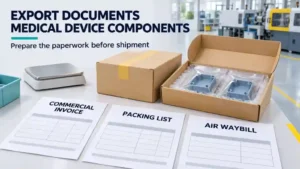
Your parts are molded, inspected, and packed. Then the shipment sits in customs for nine days because one document is missing or one code is wrong. Your buyer’s assembly line waits, and your launch date slips. I have seen this happen to good companies with excellent parts. The fix is simple: know which export documents your medical device components need before the first carton leaves the dock. Medical device components usually need three core shipping documents: a commercial invoice, a packing list, and a bill of lading or air waybill. All three must show accurate descriptions, quantities, values, and HS
Read More »
prototype injection mold for a medical device component
Medical Device Injection Molding

How Much Does a Medical Device Prototype Mold Cost?

A medical device prototype mold typically costs from around $2,500 for a simple aluminum tool to roughly \$20,000 or more for complex, steel, multi-cavity, or production-intent tooling. The final price may vary depending on several factors. These include part geometry, medical-grade resin selection, documentation scope, and device risk. Understanding these factors before you send an RFQ or accept a quote helps you set a realistic budget. This guide explains medical device prototype molding costs for device OEMs, startups, R&D teams, and sourcing departments. It outlines the main factors, timelines, and quotation checks that support a realistic budget. The figures below

Read More »
medical-components-china-tariffs-hs-codes
HS Codes

Tariffs and HS Codes for Medical Components from China

Medical components imported from China pass through a layered duty system that changed materially in 2026. Classification under the Harmonized System (HS) determines which duties apply, and a single misplaced code can alter landed cost significantly. This article is for US buyers and engineers sourcing injection molds and molded medical components, and reviews the tariff position as of October 15, 2026, the headings used for injection molds, molded parts, and finished disposables, and the practices that reduce customs risk. This article uses ‘HS code’ in the general search sense. U.S. entries are filed under the 10-digit Harmonized Tariff Schedule of

Read More »
Injection-molded medical device housings prepared for export to the US
injection molding

Understanding US Import Regulations for Molded Medical Parts

The United States is a major market for medical devices and diagnostic products, and many manufacturers source injection-molded components internationally. When molded medical parts are imported into the U.S., their regulatory treatment depends largely on whether they are components intended for further manufacturing or finished medical devices ready for commercial distribution. This article breaks down the complex regulatory requirements for importing medical device components into the US. The Dual Regulatory Framework For Importing Medical Molded Parts Into The US Two separate authorities govern the entry of medical molded parts into the United States. The first is the US Food and

Read More »
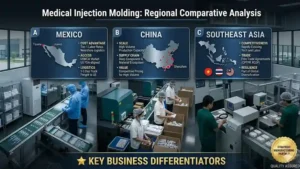
Medical injection molding factory comparison: Mexico, China, and Southeast Asia
Medical Device Injection Molding

Medical Injection Molding in Mexico vs China vs Southeast Asia

Medical Injection Molding in Mexico vs China vs Southeast Asia For business expansion, investing in a reliable manufacturer abroad can add value. Mexico, China and Southeast Asia serve as major manufacturing and supplier bases for medical injection molding. But the harder decision when choosing a supplier is whether to nearshore or offshore. The location is one of the main factors to consider, as it can affect costs, quality, lead times and market responsiveness. This guide compares Mexico, China, and Southeast Asia across costs, supply chain, infrastructure, engineering capabilities, and other factors, so you can decide which fits your project. Comparative

Read More »
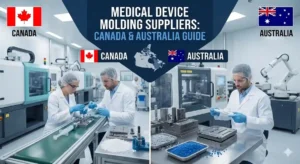
Medical Injection Molding Canada and Australia
injection molding

How to Evaluate a Medical Injection Molding Supplier for Canada and Australia

Selecting a medical injection molding supplier can affect the manufacturing and quality evidence an OEM uses to support finished-device compliance. However, a contract molder does not automatically become the legal manufacturer, Canadian licence holder, importer or distributor, Australian sponsor, or ARTG applicant. The regulated entity remains responsible for determining the device classification, market-authorisation route, and applicable quality-system requirements. OEMs should evaluate a molder according to the outsourced process and the risk of the finished device. Relevant controls may include documented specifications, design-for-manufacturing review, material and lot traceability, inspection, process validation where required, nonconformance handling, change notification, record retention, and audit

Read More »
Sourcing Medical Injection Molding in China to EU
injection molding

Sourcing Medical Injection Molding from China for the EU Market: Key Risks and How to Manage Them

China can offer EU medical device companies competitive tooling costs, experienced mold engineering and scalable injection molding capacity. However, successful sourcing depends on more than price, factory size or quoted lead time. Buyers must verify that the supplier’s quality-system scope matches the project, define regulatory and quality responsibilities, control materials and manufacturing changes, and document tooling and intellectual property ownership. This guide explains seven areas that EU medical device companies should evaluate when sourcing injection molds or molded medical components from China, along with practical controls to reduce associated risks. Why Supplier Quality Controls Matter A McKinsey study estimated that

Read More »
Vet a Chinese Medical Injection Molding Supplier
Medical Device Injection Molding

How to Vet a Chinese Medical Injection Molding Supplier?

Some buyers may begin assessing Chinese medical injection molding suppliers based on pricing. But honestly, vetting a medical injection mold supplier extends far beyond that1. To evaluate the legitimacy of your supplier, verify whether the company adheres to a strict regulatory framework, holds relevant certifications, and meets biocompatibility, safety, and consistency standards2. This guide outlines a detailed process for vetting a Chinese Medical Injection Molding Supplier. So, whether you are a procurement officer, a medical company owner, or a project engineer, this guide has everything you need to get started. How Does Medical Injection Molding Manufacturing Differ from Standard Injection

Read More »
Sourcing Medical Device Injection Molding From China to Germany
Medical Device Injection Molding

Sourcing Medical Device Injection Molding From China to Germany

Sourcing Medical Device Injection Molding From China to Germany No doubt, the Chinese injection molding market is highly competitive. But not all molders fulfil the strict regulatory standards necessary for medical injection molding. Do you want to source medical device injection molding from China for Germany? Then, you need some strong technical knowledge. And stay updated with industry insights. So, here we have a fully prepared roadmap for sourcing from China to Germany. We’ll also discuss market stats, regulatory requirements, and solutions to sourcing challenges. Whether you are sourcing injection molding pipette tips or tube caps, this will ensure a

Read More »
sourcing medical injection molding
Medical Device Injection Molding

How US Medical Device Companies Source Injection Molding from China?

Sourcing medical device injection molding from China to the US is a strategic move and can bring tremendous advantages to your business. Yet, it is not an easy process. With the global medical injection molding market expanding at a CAGR of 7.74% (2026-2032), the medical regulatory requirements are getting more stringent at every step. In practice, 75% of the issues arise not because of a lack of manufacturing capabilities, but because of a lack of understanding of process validation, hidden costs, and how sourcing works. So, it’s time for careful understanding and strategic planning. Here are some detailed insights into

Read More »

Request a Quick Quote

Send your drawings and detailed requirements via:
Email: jerry@ckmold.com

Or fill out the contact form below:

We will contact you within one working day. Please pay attention to the email with the suffix “@ckmold.com”